
Appliance packaging guide — a practical guide from Packsmith India, a corrugated and printed box factory at IMT Kharkhoda, Delhi NCR. It covers inserts, drop tests and the board that keeps appliances intact.
Appliances are heavy, oddly shaped and often shipped one at a time by courier. The carton is the only thing between a 6 kg mixer grinder and a concrete floor. This guide explains how Packsmith designs appliance packaging for OEMs in Delhi NCR – the same thinking applies whether you make fans in Badli, geysers in Faridabad or kitchen appliances in Greater Noida.
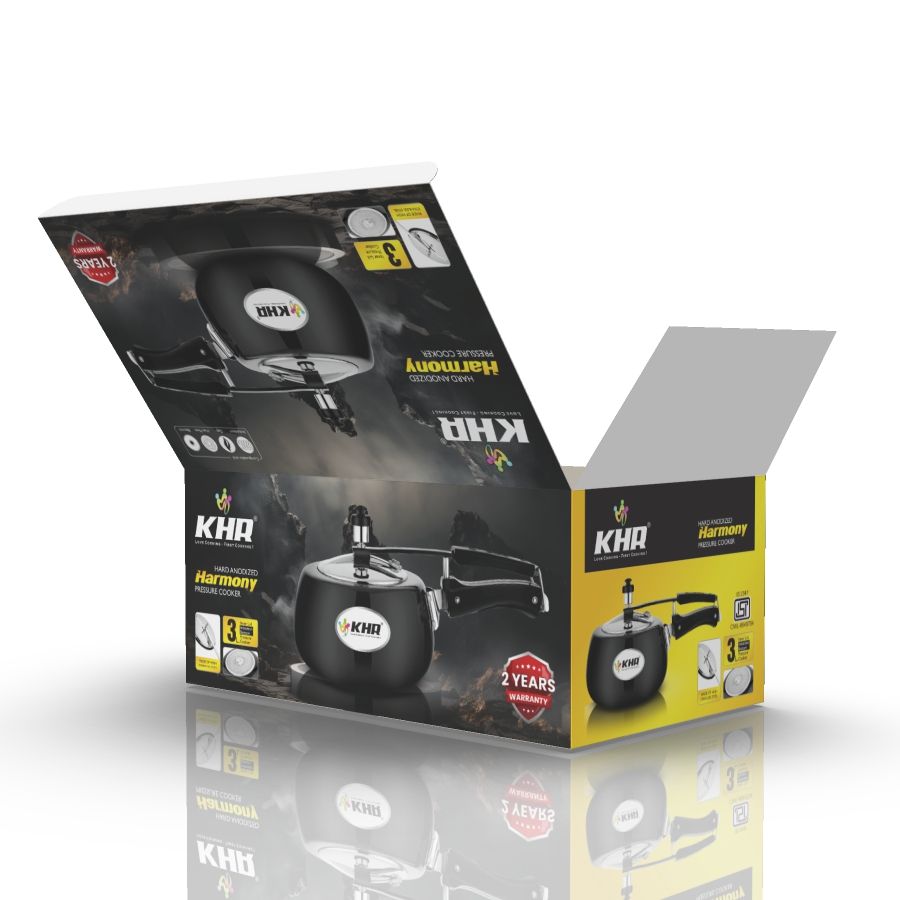
Appliance packaging guide: the essentials
Step 1: Define the journey
Factory → distributor godown → retailer is a different journey from factory → e-commerce warehouse → courier → customer. The courier route sees more drops and is where we add margin: higher BF liners, corner protection and a tighter insert.
Step 2: Choose the insert
| Insert | Pros | Cons | Best for |
|---|---|---|---|
| Die-cut corrugated | Recyclable, printable, cheap, no tooling delay | Less cushioning than foam for very heavy units | Mixers, irons, toasters, small kitchen appliances |
| EPS (thermocol) | Excellent cushioning | Mould cost, bulky, environmental pushback | TVs, ACs, large fragile appliances |
| Honeycomb / paper pulp | Strong, eco-friendly | Higher unit cost | Export, premium brands |
For most appliances under 10 kg, a well-designed corrugated insert outperforms foam on cost and is accepted by export buyers who restrict EPS.
Step 3: Select the board
Under 5 kg: 5-ply with 150 GSM liners. 5–15 kg: 5-ply with 180 GSM or BC flute. Above 15 kg or upright appliances: 7-ply with a base pad. Retail-facing units get an offset-printed, laminated top liner so the carton photographs well on marketplaces too.
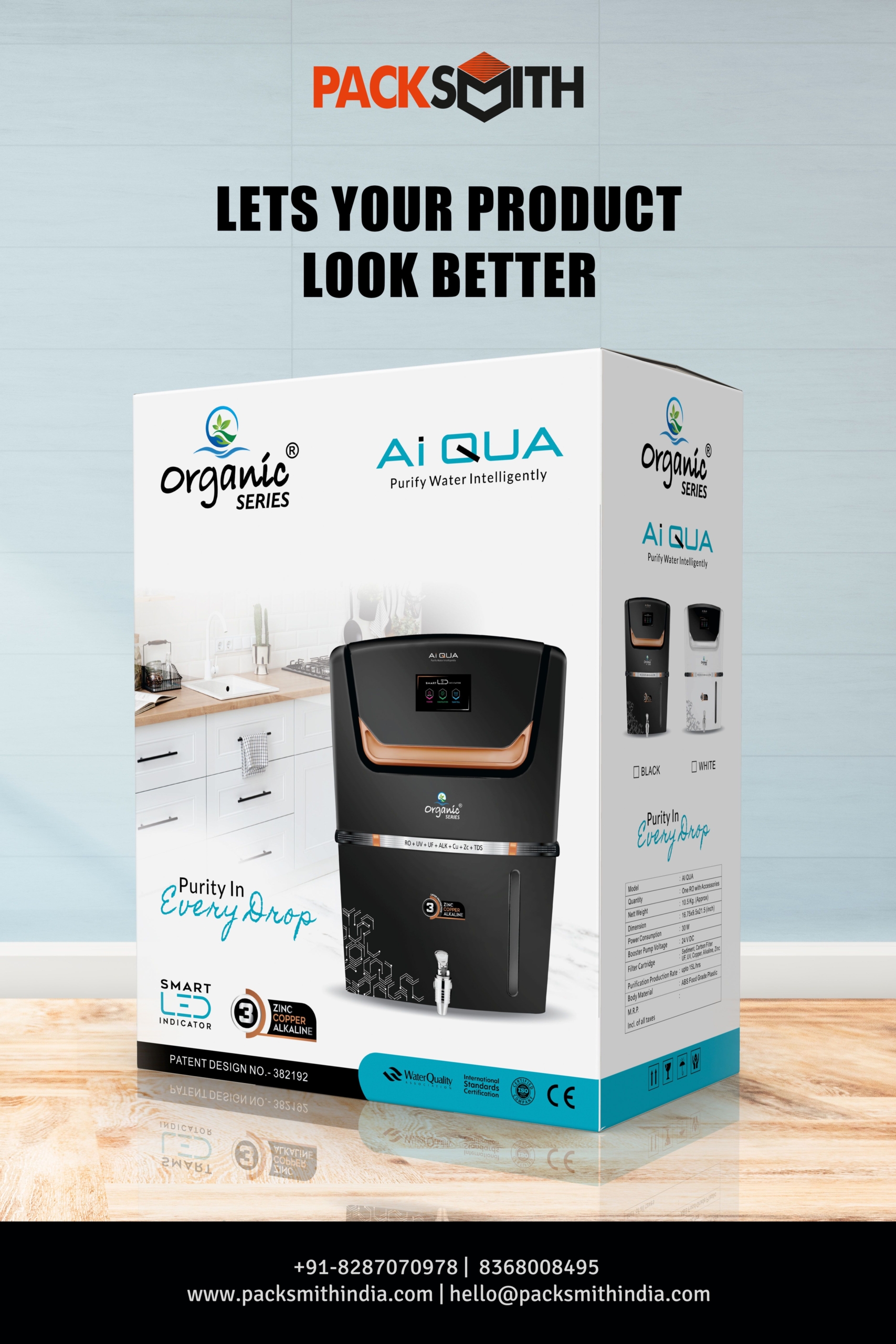
Step 4: Test before you ship
- Drop test: 10 drops from 60–76 cm on corners, edges and faces (based on ISTA 1A / 3A principles). Open and inspect.
- Compression: stack to the godown height for 24 hours; measure deformation.
- Vibration (optional): for courier routes, a short vibration cycle reveals rubbing on glossy finishes.
Step 5: Design the print to sell
Marketplace shoppers see the carton in the unboxing photo; retail shoppers see it on the shelf. Show the product, lead with two or three benefits, keep the warranty and service numbers on a side panel, and leave a clean area for the serial-number label.
Common mistakes we fix
- Box too large “to be safe” – the product moves and breaks anyway.
- Accessories loose in the box – they scratch the main unit.
- No base pad on upright products – bottom crushes under its own weight.
- Glossy lamination with no scuff test – white rub marks on every carton.
Send your appliance dimensions and weight – we will sample an insert and carton.
Get a quote on WhatsApp → · Try the box calculator
Related: Appliance packaging boxes · Packaging for Badli appliance makers
Appliance packaging guide: inside a single-roof carton factory
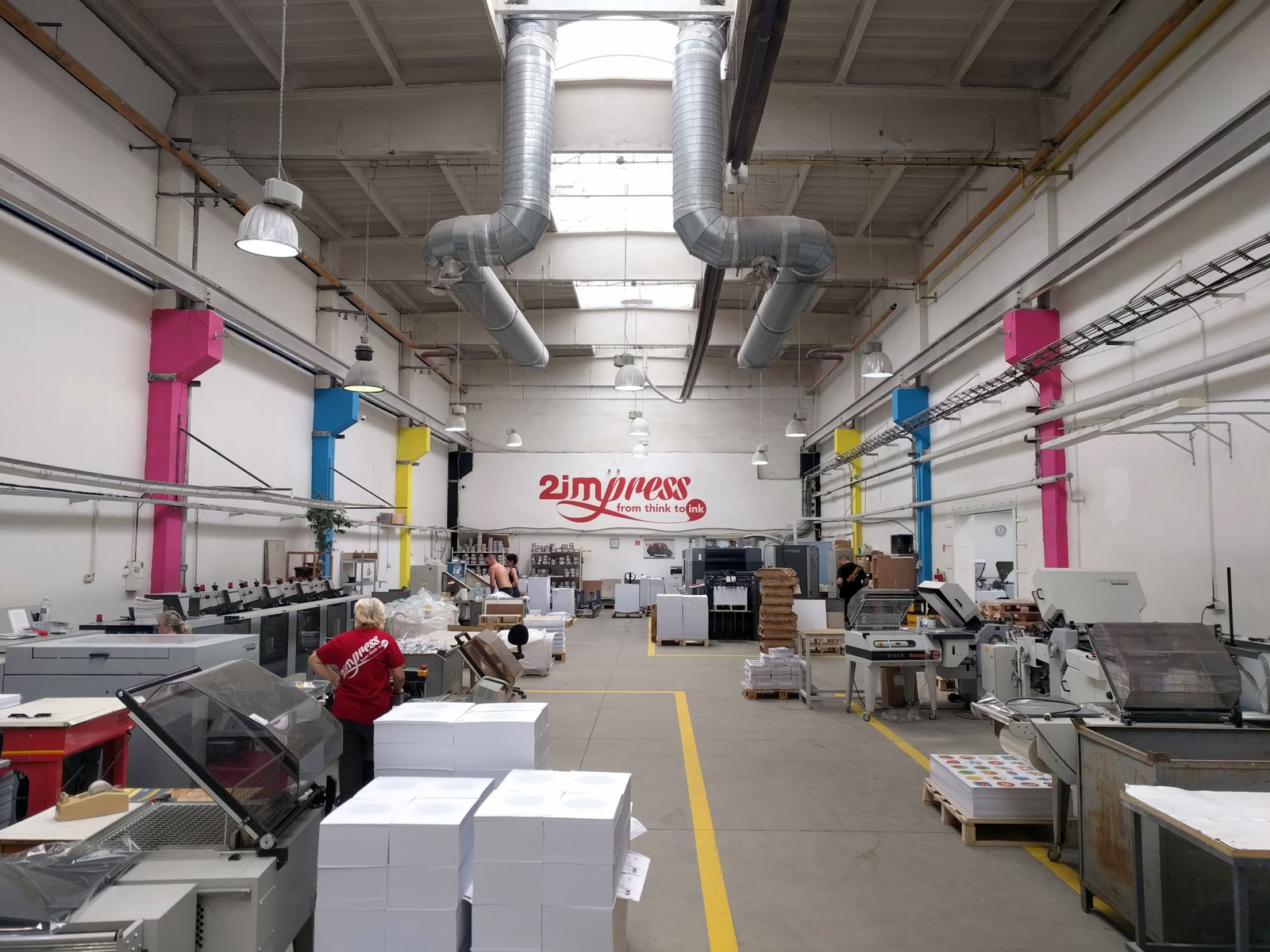
The practical side of appliance packaging guide is decided by six production steps that, at Packsmith India, all happen in one building. Pre-press checks artwork and makes plates on the CTP unit. The Heidelberg four- or six-colour press prints a 28×40 inch sheet with aqueous or UV coating applied inline. Wet lamination bonds the printed sheet to corrugated board with water-based adhesive and no heat, so the board stays flat.
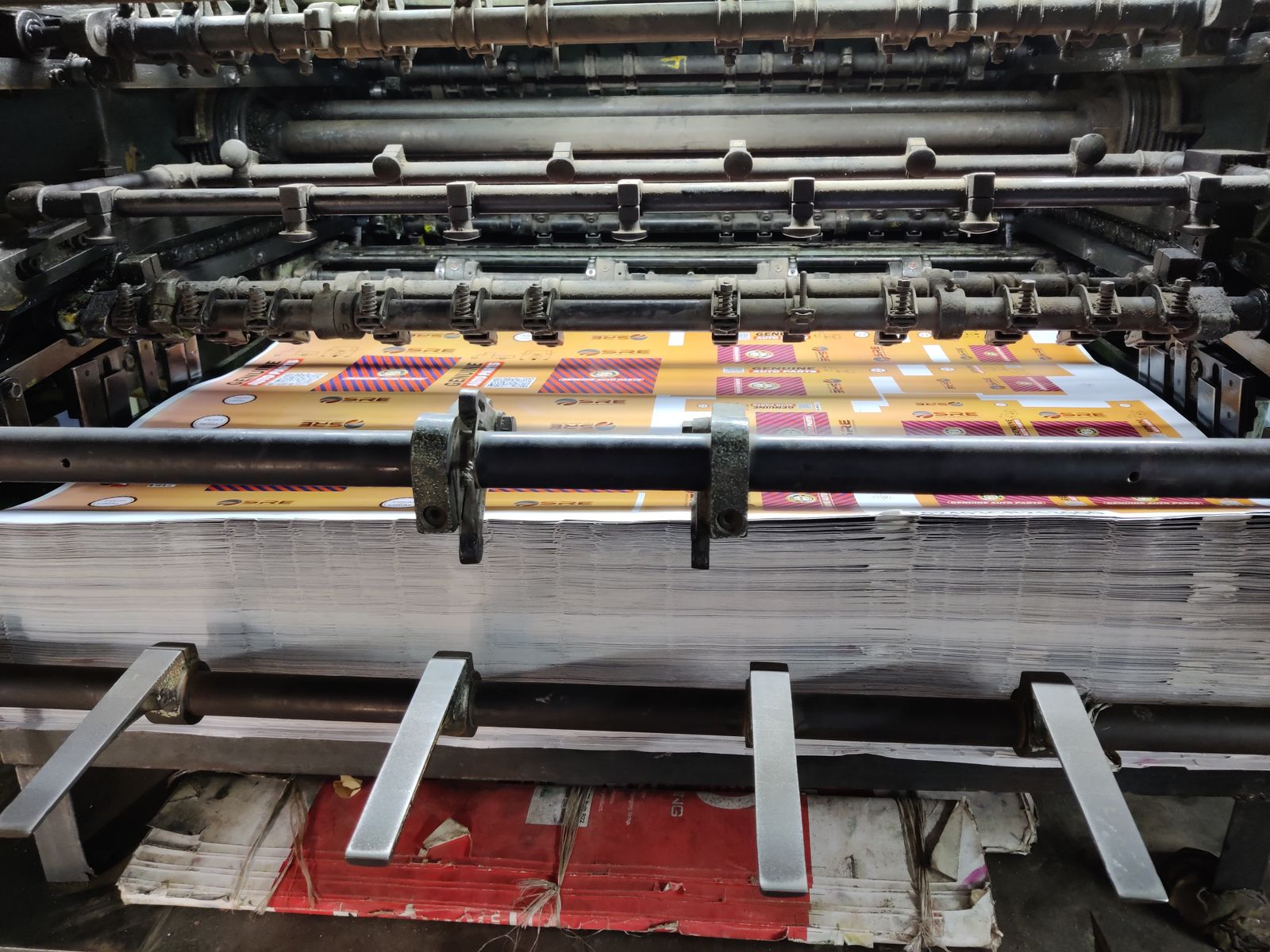
The flute laminator produces E, B or C flute board in 3-ply or 5-ply in parallel. Die-cutting shapes the blank and strips waste; the Robus folder-gluer closes retail cartons and a stitcher handles heavy export shippers. A sample from every lot goes to the lab for bursting, edge-crush and Cobb tests before the bundles are strapped and loaded.
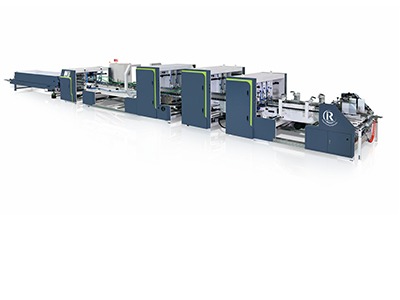
With no sub-contracting, the 7–10 working-day lead time quoted alongside appliance packaging guide holds in peak season when outsourced chains stretch to three weeks. The machines are shown on our packaging factory infrastructure page.
Appliance packaging guide and board specification
No discussion of appliance packaging guide is complete without flute and GSM. E-flute (about 1.5 mm) gives a smooth printable face for retail cartons. B-flute (about 3 mm) adds crush resistance with a decent print surface. C-flute (about 4 mm) is the standard shipping flute. Five-ply BC or EB board carries 25–40 kg through transit. Paper grade matters as much as flute: a 180 GSM virgin kraft liner behaves very differently from a 120 GSM recycled one, and bursting strength roughly tracks liner weight.
The rule of thumb we give buyers asking about appliance packaging guide: match the flute to the shelf, not the warehouse. If a shopper sees the box, start with E-flute and a printed duplex liner; if it only has to survive a truck, start with C-flute kraft and spend the saving on a heavier liner. Ask any supplier for the GSM of every layer and the bursting factor in writing; two quotes can only be compared on the same specification. Our corrugated box manufacturer page lists the standard grades.
Appliance packaging guide: offset, flexo and finishes
Offset printing on Heidelberg presses reproduces photographs, fine type and brand colours accurately; four-colour process covers most artwork and the six-colour press adds a Pantone or metallic with inline coating. Flexographic printing in one or two colours directly on kraft is cheaper and right for plain shippers. In appliance packaging guide terms, offset is the retail default and flexo the shipper default.
UV coating gives a hard gloss that resists scuffing. Wet lamination bonds the printed sheet to board with water-based adhesive and keeps it flat; we do not use thermal lamination. Spot UV, embossing and metallised film are available for premium ranges at a small premium. All finishing is done in the same building as printing, so appliance packaging guide never involves a sheet travelling between vendors.
Briefing artwork when appliance packaging guide is the project
Send the logo as a vector (AI, EPS, PDF, SVG), Pantone references or a printed item to match, and photographs at 300 dpi at printed size. Keep text at least 6 pt and 5 mm from folds and cut lines, because die-cutting tolerance is about 1.5 mm. Supply barcodes as vectors with the number beside them and name the panel they sit on. For the dieline, give internal product dimensions in millimetres, weight and how the box should open.
You receive a proof PDF with bleed and safe areas marked; approve by email or WhatsApp and the printed sample follows within four working days. This checklist is the fastest route from a appliance packaging guide enquiry to an approved sample. The box size calculator produces the dimensions in a minute.
Appliance packaging guide: what the lab report tells you
Every lot is tested for bursting strength (kg/cm²), edge crush (stacking strength) and Cobb value (water absorption), with the report attached to the invoice and kept three years under ISO 9001:2015. Box compression and drop tests with the real product are added when a buyer needs them. For appliance packaging guide, the test report is what lets you compare our quote with anyone else’s on equal terms.
Compliance printing is routine: FSSAI panels for food-contact outer cartons, BIS marks for pressure cookers and appliances, ISPM-15 and export shipping marks where a forwarder requires them. We are MSME and Udyog Aadhaar registered, and board standards follow the Federation of Corrugated Box Manufacturers of India.
What appliance packaging guide costs and why
Price is built from board (55–65%), printing, conversion and delivery. Quantity per lot and board grade move it most: a 5,000-box lot is noticeably cheaper per box than 1,000, and moving from a 120 GSM to a 180 GSM liner adds roughly 15–20% to the board line. Minimum order is 1,000 boxes per SKU and mixed-SKU orders can share a slot. Where appliance packaging guide is sub-contracted, each hand-off adds an 8–15% margin and a transport cost.
New accounts pay 50% advance and 50% before dispatch; established accounts move to 30-day credit after three clean lots. Quotes are valid 30 days and revised only when paper prices move more than 5%, flagged in advance. Common questions are answered in the packaging FAQ.
Appliance packaging guide: lead time and logistics
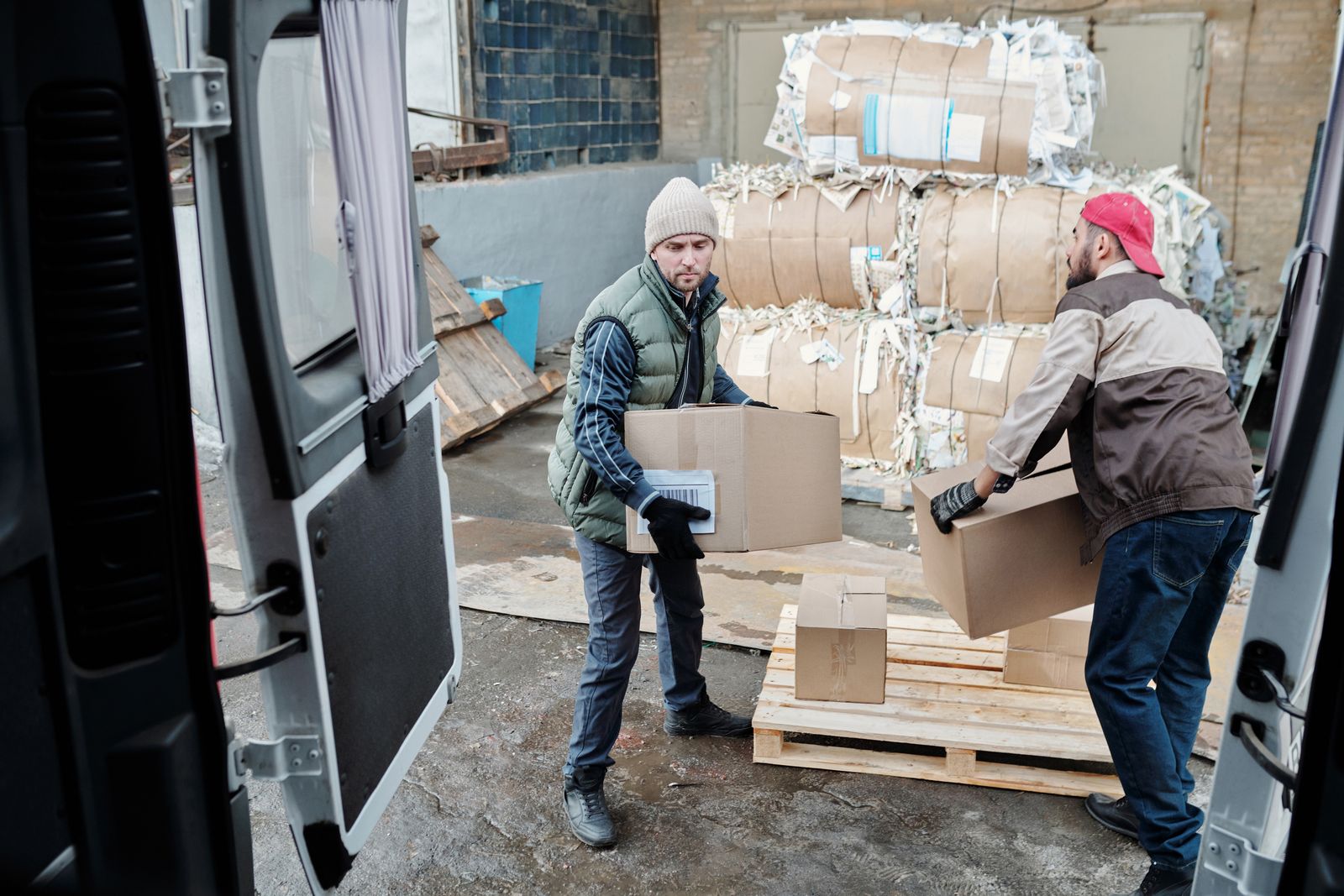
Our own vehicles deliver on fixed days to Bawana, Narela, Kundli, Badli, Wazirpur, Okhla, Gurugram, Manesar, Faridabad, Noida and Greater Noida, which lets a brand run on a week of carton stock rather than a month. Elsewhere in India, cartons ship flat on pallets by part-load transporter in two to four days with a test carton sent ahead. The appliance packaging guide timeline is 48 hours to a white sample, four working days to a printed one, 7–10 working days to bulk and 7 to a repeat.
Brands already on this schedule are listed on the packaging clients page and the boxes themselves in the packaging gallery.
Appliance packaging guide and recyclability
Corrugated board is among the most recycled materials in India. Our liners blend recycled fibre with virgin kraft, and a mill declaration of recycled content is available for sustainability reports. Water-based adhesives and wet lamination mean no solvent emissions; die-cutting offcuts are baled and returned to the mill. In appliance packaging guide, the biggest single sustainability gain is usually swapping foam inserts for corrugated ones. Ask for a mono-material sample and we show both options side by side.
Quick answers on appliance packaging guide
Minimum order? 1,000 boxes per SKU. Sample time? White in 48 hours, printed in four working days. Bulk lead time? 7–10 working days; repeats 7. Where do you deliver? Own fleet across Delhi NCR, transporter across India. Can you design the box? Yes, pre-press prepares dielines and adapts artwork. Certified? ISO 9001:2015, MSME, Udyog Aadhaar. Any other appliance packaging guide question: WhatsApp 98107 42123 or the contact page. Factory visits at IMT Kharkhoda are welcome any working day.
Appliance packaging guide: terms used on this page
Flute: the wavy inner layer of corrugated board; E, B and C are the common profiles. Liner: the flat paper on each face. Medium: the paper that is fluted. GSM: grams per square metre, the weight of a paper layer. Bursting factor: a strength figure for the finished board. ECT: edge crush test, a stacking-strength measure. Cobb: water absorption in a fixed time. Duplex: coated white board used as a printed top liner. Dieline: the flat drawing of a box with cuts and folds.
RSC: regular slotted carton, the standard shipper. Crash-lock: a base that locks when the carton is opened. Mailer: a one-piece e-commerce box with a tuck-in lid. Master carton: an outer box holding several retail units. Wet lamination: bonding a printed sheet to board with water-based adhesive. CTP: computer-to-plate. These are the terms a supplier will use when appliance packaging guide is discussed.
Appliance packaging guide: how to compare suppliers
Put both quotes on the same specification before you look at price. Ask each supplier for flute profile, the GSM of every layer, the bursting factor, print process and colour count, finish, insert type and whether delivery is included. If one quote lacks any of these, it cannot be compared. Then ask where each process happens; if printing, lamination or corrugation is sub-contracted, add that vendor’s margin and transit time.
Next, compare sampling terms: a supplier that charges for the first printed sample or takes two weeks to produce it is signalling how repeats will go. Finally compare paperwork: a per-lot test report and a signed colour sample should be standard. Applied to appliance packaging guide, this method typically exposes a 20–30% gap between trader and factory prices.
Appliance packaging guide: a two-hour factory visit
Visits to IMT Kharkhoda are welcome any working day; the plant is 12 km from Bawana, 9 km from Kundli and a direct expressway run from Manesar, Faridabad and Noida. Bring your current box and a product sample. In two hours you can see pre-press and the stored colour samples, watch a sheet come off the Heidelberg press, compare a laminated and a metallised sheet, note the flute types in stock, fold a box from the die-cutter and watch a bursting test on a live lot.
Most appliance packaging guide questions are answered in that walk, and the written quote follows the same day. WhatsApp 98107 42123 with a preferred date so the relevant samples and reports are ready. If a visit is not practical, the same walk-through can be done on a video call with the sample couriered afterwards.
Appliance packaging guide: five errors we see on first orders
Approving a dieline from a drawing rather than a 48-hour white sample; choosing board by price alone; sending JPEG logos that print soft; forgetting the barcode panel until the proof stage; placing text within 5 mm of a fold; and ordering a retail carton without its master carton so the two never fit. Each appears here because a real brand made it once, and our pre-press team checks for all of them before a proof goes out.
The costliest appliance packaging guide mistake is comparing prices at different specifications. Ask for the GSM, the bursting factor and the process location in writing, and the comparison becomes simple.
Appliance packaging guide: how to brief us in one message
After reading about appliance packaging guide, send one message that gets a usable quote back. Include: product name and a photo; internal dimensions in millimetres (length x width x height) or the product’s dimensions with a note to add clearance; product weight; box style (tuck-in, crash-lock, RSC, mailer or master carton); print requirement (number of colours, offset or flexo, any Pantone); finish (UV, lamination, none); insert requirement; quantity per SKU and number of SKUs; delivery location; and whether a sample is wanted first.
With that message we reply within a working day with a recommended flute and board grade, the GSM of each layer, a delivered price for 1,000 and 5,000 pieces, and a sample date. Buyers who send a complete brief typically go from first message to an approved sample in under a week, which is the practical return on an hour spent on appliance packaging guide.
Appliance packaging guide: serving every industrial area of Delhi NCR
Our own vehicles deliver on fixed days to Bawana, Narela, Kundli, Badli and Wazirpur in the north and west, Okhla in south Delhi, and Gurugram, Manesar, Faridabad, Noida and Greater Noida around the ring. Each area has its own page with typical lead times, for example corrugated box manufacturer in Noida and corrugated box manufacturer in Bawana. If your plant is in one of these areas, a sample can often ride on the next scheduled run at no charge, and appliance packaging guide moves from a reading exercise to a box in your hand within the week.
Appliance packaging guide: after the first lot
Once the first lot has shipped, the account owner schedules a short call to check how the cartons performed on your packing line and in transit. Any adjustment — a millimetre of clearance, a heavier medium, a different glue flap — is made to the dieline before the repeat, so the second lot is better than the first. The signed colour sample and stored plates keep print identical across repeats, and the per-lot test report confirms the board has not drifted.
Brands that come back for a second SKU go straight to sampling, because the board, finish and insert logic from the first job carry across. Many of our longest-standing clients started with a single 1,000-box trial and added SKUs over a year; everything on this page about appliance packaging guide is designed for that path. New accounts pay 50% advance and 50% before dispatch; established accounts move to 30-day credit after three clean lots, and quotes are revised only when paper prices move more than 5%.

Leave A Comment