
Appliance packaging · Delhi NCR
Corrugated boxes built to carry appliances safely from factory to home.
Appliance packaging boxes from Packsmith India: Printed 3-ply and 5-ply shipping cartons for mixer grinders, pressure cookers, induction cooktops, heaters, kitchen sets and small home appliances. Engineered for stacking strength, a snug product fit and shelf-ready branding — supplied in bulk to OEMs across Delhi NCR.
Specifications
What goes into an appliance box
Why Packsmith
Built for appliance OEM supply chains
Appliance makers need boxes that arrive on schedule, fit the product on the first try and look the same across every batch. That is what our in-house process is set up for.
Who it’s for
Products we pack every month
Mixer grinders · Pressure cookers · Induction cooktops · Electric kettles · Room heaters · Sandwich makers · Kitchen gift sets · Water purifier components · Small home and kitchen appliances for OEMs, private-label brands and distributors.
FAQ
Common questions
Appliance packaging boxes: how to specify the right carton for your product
Appliance packaging boxes do two jobs at once. They have to survive a forklift, a 40-ft container or a Delhi NCR courier van, and they have to look good enough to sell the product on a retail shelf. Most problems we see — crushed corners, wet print, boxes that will not lock — come from one of six decisions being made in a hurry. This guide walks through each of them so your first order from Packsmith arrives right.
1. Match the ply and flute to the appliance weight
For appliance packaging boxes, the board grade is set by the net weight of the unit and how it will travel. For light counter-top appliance packaging boxes (units up to about 3–4 kg) (hand blenders, kettles, toasters) travel well in 3-ply E or B flute. Mixer grinders, induction cooktops, OTGs and pressure cookers in the 4–12 kg band need 5-ply B/C flute with a 120–150 GSM virgin top liner. Water purifiers, air fryers and small ovens above 12 kg, or anything exported in a stacked container, should move to 5-ply with higher bursting strength or 7-ply.
| Appliance weight | Recommended board | Typical bursting strength | Example products |
|---|---|---|---|
| Up to 4 kg | 3-ply, E or B flute | 12–16 kg/cm² | Kettles, hand blenders, irons |
| 4–12 kg | 5-ply, B/C flute | 16–22 kg/cm² | Mixer grinders, cooktops, cookers |
| 12–25 kg | 5-ply heavy / 7-ply | 22–32 kg/cm² | Water purifiers, OTGs, air fryers |
| Export, palletised | 7-ply, BC flute | 30+ kg/cm² | Any of the above for GCC / Africa |
2. Decide the insert before the outer box
The outer carton is only half of appliance packaging boxes done right. The insert — EPS (thermocol) fitments, corrugated partitions, die-cut pads or honeycomb — is what stops the appliance from moving. Our rule of thumb: if the product has a glass jar, a detachable base or a protruding handle, it needs a two-piece insert that locks the unit in place. We design and sample the insert together with the appliance packaging boxes so that the outer dimensions stay as small as possible, which directly lowers your freight per unit.
3. Printing: offset for retail, flexo for transit
If the box will be seen by a customer, choose offset-printed appliance packaging boxes with a laminated or UV-coated top sheet — photo-quality print, metallised film options and gloss or matte finish. If the carton is a transit-only master carton that goes straight to a warehouse, single- or two-colour flexo printing on kraft is cheaper and perfectly adequate. Many of our appliance packaging boxes clients run both: a printed inner box per unit and a plain master carton for 4–6 units. Read our comparison of offset vs flexo printing for packaging before you sign off artwork.
4. Test it like a courier will treat it
Every lot of appliance packaging boxes leaving our Sonipat factory is checked for bursting strength (BS), GSM and print match against the approved sample. For e-commerce or export appliance packaging boxes we recommend a simple drop test on the packed unit from 80–100 cm on corners and edges, which mirrors the ISTA transit test procedures used by large marketplaces. If your buyer asks for certification, we can arrange third-party BS and cobb testing on request.
5. What drives the price of appliance packaging boxes
For appliance packaging boxes, board grade and GSM come first, then size (because it sets how many boxes fit on a sheet), then print colours and finish, and finally the insert. Quantity matters more than most buyers expect: a 1,000-piece run and a 5,000-piece run of the same box can differ by 20–30% per piece because plates, dies and set-up are spread over more units. Use our box size and price calculator for a quick estimate, or send the product dimensions on WhatsApp for an exact quote.
6. Lead time, MOQ and delivery
Our MOQ for printed appliance packaging boxes is 1,000 pieces; plain shipping cartons can be lower. Sampling takes 3–5 working days, bulk production 7–10 working days after artwork approval, and we deliver across Delhi NCR — Bawana, Kundli, Noida, Manesar and Faridabad — on our own vehicles. Repeat orders of appliance packaging boxes use the same stored dies and plates, so the second run is faster and cheaper.
Quick checklist before you order appliance packaging boxes
- Net and gross weight of the appliance, with accessories
- Inner dimensions you want (or send the product and we will measure)
- Will the box be seen at retail, or is it transit-only?
- Units per master carton and whether pallets are used
- Artwork as print-ready PDF, or a photo for our designers to work from
- Required quantity and the date you need stock in your line
Send these six points to WhatsApp 98107 42123 and you will have a drawing, a sample schedule and a landed price for your appliance packaging boxes within 24 hours.
Complete guide to appliance packaging boxes (expand any section)
Everything below is what our sales team explains to a new appliance brand in the first meeting. Open the sections you need; each one is written from jobs we actually run at the Sonipat factory.
Appliance packaging boxes by product type: what each category needs
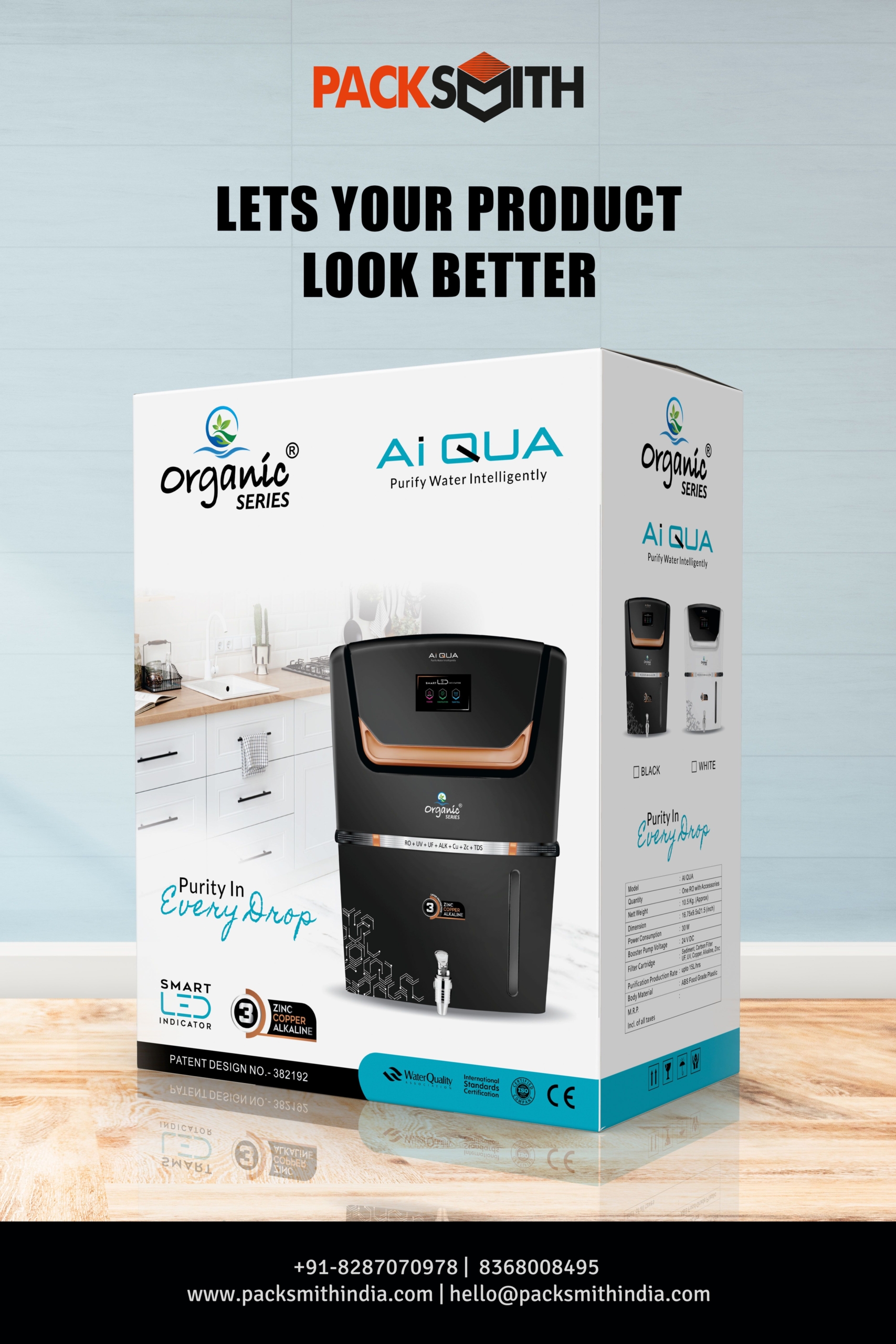
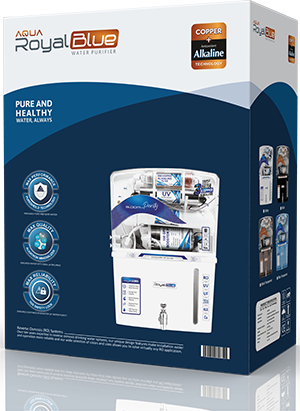
We also make printed and generic RO packaging boxes for water-purifier brands and assemblers. Mixer grinders and juicers. Heavy motor base, light jars, lots of accessories. The classic spec is a 5-ply B-flute printed box with a two-part EPS or corrugated insert: one cavity for the base, one tray for jars and blades. The lid-end gets a printed “this side up” panel because warehouses stack them on the motor end otherwise. Weight 3.5–6 kg packed.
Induction cooktops and infrared cookers. Thin, wide and fragile glass top. Appliance packaging boxes here are flat 5-ply cartons with full-face corrugated pads above and below the glass and corner protectors. A 4-colour offset print with gloss lamination is standard because the box is displayed face-up in stores.
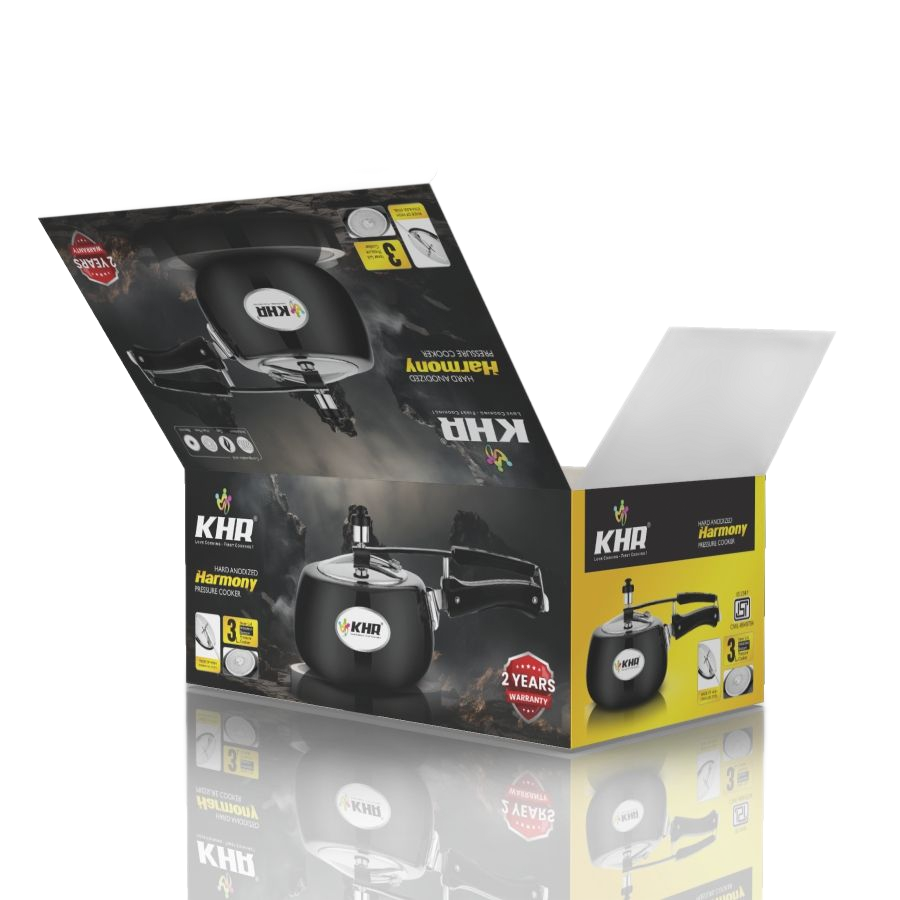
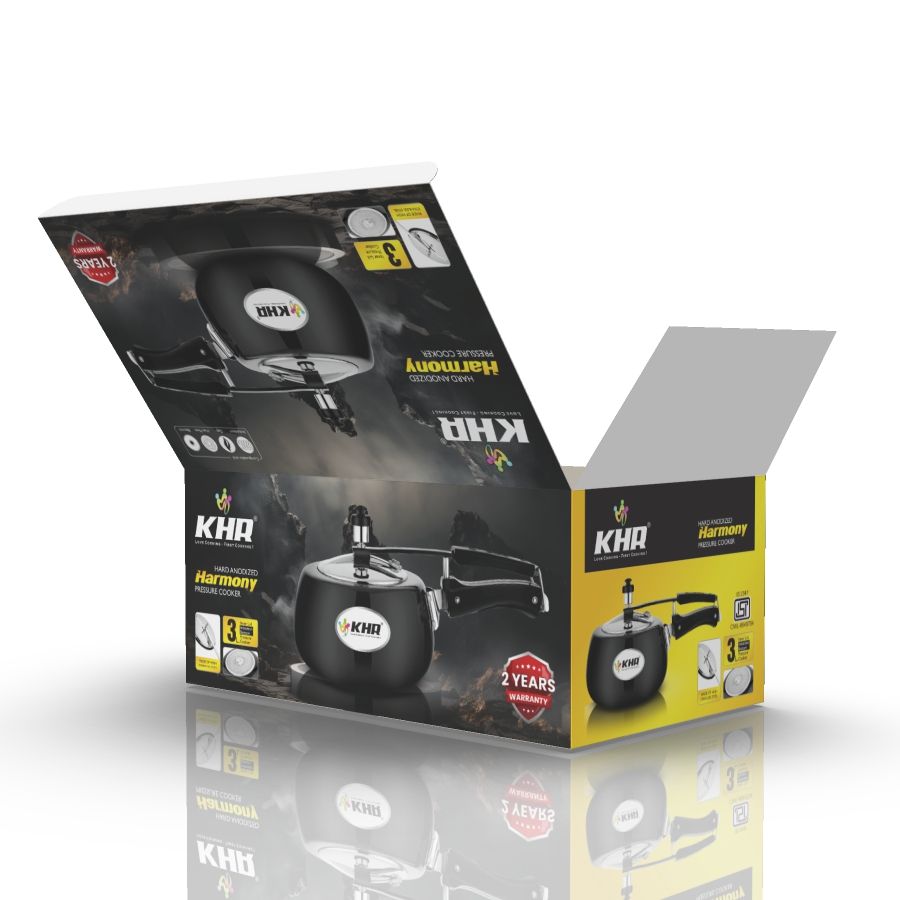
Pressure cookers and kadhai sets. Dense weight in a small footprint. 3-ply E-flute is enough for 2–3 litre units; 5 litre and above should move to 5-ply. Metallised (met-pet) UV printed sheets are popular in this category because the silver base makes stainless steel photography pop.
Water purifiers and RO units. Tall, top-heavy, with fittings that snap off. These appliance packaging boxes are 5-ply heavy or 7-ply, with a moulded EPS cradle, and we add a hand-hole die-cut on both sides because delivery staff carry them up stairs. Expect 8–14 kg packed.
OTGs, air fryers and microwave-class units. Large cube, glass door, 10–20 kg. 7-ply BC flute with internal corner posts; export orders also get a kraft outer master carton. Print is usually two-colour flexo on the master and full offset on the inner retail box.
Kettles, toasters, irons and hand blenders. The lightest category and the most price-sensitive. 3-ply E-flute with a single corrugated partition or a die-cut cradle keeps the cost down; a window patch can be added if the brand wants the product visible.
Artwork, dieline and printing checklist for appliance packaging boxes
Send artwork as a print-ready PDF at 300 dpi in CMYK, with 3 mm bleed on every panel and text at least 5 mm away from crease lines. If you only have a product photo, our in-house designers build the dieline and layout for you — most appliance packaging boxes we produce start from a phone photo and a spec sheet. Keep statutory text (MRP, net quantity, manufacturer address, customer-care number, BIS/ISI marks where applicable) on the same panel as the barcode so your packing line can scan and read in one pass.
Choose finishes deliberately: gloss lamination gives punchy colours and is the easiest to wipe clean; matte lamination photographs beautifully but shows scuffs; spot UV on the logo or product shot adds shelf presence for a few paise per box. For stainless-steel cookware and premium appliances, metallised film lamination with UV printing is the finish buyers associate with national brands.
Before approving, check the sample for colour against your brand guide under daylight (not under yellow factory lights), confirm the barcode scans, and fold the box fully to make sure the auto-lock bottom engages without tape. We photograph the approved sample and keep it on file — every repeat order of your appliance packaging boxes is matched to that sample.
Export cartons, compliance and shipping marks
Appliance packaging boxes going to the GCC, Africa or South Asia need a stronger outer and clearer marks. Standard practice is a 5-ply or 7-ply master carton holding 2–6 retail boxes, with ISPM-free paper-based packaging (no wooden pallets needed for the carton itself), shipping marks printed on two adjacent faces — consignee, carton number, gross/net weight, dimensions, country of origin — and international handling symbols. Humidity in sea freight is the biggest enemy, so we specify virgin kraft liners, moisture-resistant adhesive and recommend a poly bag or desiccant inside the retail box for electrical appliances.
For Indian retail, BIS certification applies to many electrical appliances and the standard mark must appear on the product and often on the packaging; your compliance team confirms the exact requirement, and we reserve the panel space. We also keep bursting-strength and GSM reports per lot so you can share them with a buyer’s QA team. See our export carton checklist for the full list of marks and tests.
Frequently asked questions about appliance packaging boxes
Can one box design carry different models? Yes, if the footprint is similar; we design a universal insert with knock-out sections and print a variable panel for model names. It cuts die cost and lets you order appliance packaging boxes in larger, cheaper runs.
What is the minimum order? 1,000 pieces for printed boxes. Plain master cartons can be lower. Sampling is free for confirmed orders.
How long do you keep our dies and plates? As long as you order at least once a year. Repeat orders of appliance packaging boxes skip pre-press and ship in 5–7 working days.
Do you deliver outside Delhi NCR? Yes — Haryana, Punjab, UP, Uttarakhand and Rajasthan by transport, and pan-India for export consolidation. Within NCR we deliver on our own vehicles.
Can you print on recycled kraft? Yes; kraft appliance packaging boxes with one- or two-colour print are a popular eco option for D2C brands, and FSC-certified board is available on request.
Who do I talk to? WhatsApp 98107 42123 or email hello@packsmithindia.com with the product name and quantity, and you will get a quote within 24 hours.
Get a quote
Send us your product details — we quote within 24 hours.
Share product, quantity and sizes. Our team recommends board grade and print finish, then shares pricing and a sample timeline.
Call: +91 98107 42123 · +91 98912 01234
Email: hello@packsmithindia.com