
Free box size calculator
Box size & board calculator
Enter your product dimensions, weight and quantity. The calculator suggests inner box size, ply and board grade, box style and inserts — then sends the specs straight to our team on WhatsApp for a quote.
Your product
Recommended box
Fill in your product details and press calculate. The recommendation is a starting point — our team confirms board grade and size on a physical sample.
Box styles guide
Which box style does your product need?
The international FEFCO codes every packaging buyer should know — and what we recommend each one for.
Board guide
3-ply, 5-ply or 7-ply?
Box size calculator guide: 6 steps from product dimensions to a quote
The box size calculator above turns your product’s length, width and height into a recommended carton size, flute and board grade, and a ballpark price per 1,000 boxes. This guide explains what the box size calculator assumes, how to measure correctly, which box style to pick and how to move from the estimate to a sample. Treat the box size calculator as a planning tool; the final price comes from a sample and a written quote with the GSM of every layer.

Step 1 – Measure the product for the box size calculator
Measure the product at its widest points in millimetres, including any protruding handle, lid or spout. If the product sits in an insert or a polybag, measure the packed unit, not the bare product. For sets, lay the pieces out as they will be packed and measure the footprint. Enter length, width and height in that order; the box size calculator adds clearance automatically.
Step 2 – Understand the clearance the box size calculator adds
A carton that fits too tightly cannot be packed on a line and splits at the corners; one that is too loose lets the product move and break. The box size calculator adds 3–5 mm per side for retail cartons and 8–12 mm per side for shippers with inserts. If you need a different clearance, say so in the enquiry and we adjust the dieline before sampling.
Step 3 – Pick a box style
Tuck-in and crash-lock cartons suit retail; regular slotted cartons (RSC) suit shipping; mailers suit e-commerce; and master cartons hold several retail units. The styles are illustrated in the packaging gallery, and the box size calculator shows the typical flute for each.
Step 4 – Check flute and board grade
E-flute for retail faces, B-flute for crush resistance, C-flute for shipping, and 5-ply for 25–40 kg loads. The box size calculator proposes a flute from product weight; for details, read our corrugated box manufacturer page.
Step 5 – Read the price band
The box size calculator shows a band, not a fixed price, because board, printing and quantity move the number. A 5,000-box lot is noticeably cheaper per box than 1,000; the minimum is 1,000 per SKU.
Step 6 – Get a sample
Send the box size calculator result and a product photo on WhatsApp 98107 42123 or via the contact page. A white sample follows in 48 hours and a printed sample in four working days, made in our own packaging factory infrastructure.
Box size calculator: converting inches and centimetres
The box size calculator works in millimetres because dielines are drawn in millimetres. If your drawings are in inches, multiply by 25.4; if in centimetres, multiply by 10. Round up to the nearest millimetre, never down, because a box that is 1 mm too small fails on the packing line while one that is 1 mm too large is harmless. Industry convention lists internal dimensions as length x width x height, with length the longer side of the opening. Enter the box size calculator fields in that order so the recommended style and the quote match.
For odd shapes such as pans with a long handle, measure the bounding box of the product as it will be placed, and note whether the handle can be removed or folded for packing. The box size calculator cannot see the shape, so tell us in the enquiry.
Box size calculator: how weight changes the recommendation
Product weight decides flute and board more than dimensions do. Below 2 kg the box size calculator suggests 3-ply E or B flute; from 2 to 6 kg, 3-ply C flute with heavier liners or 5-ply EB; above 6 kg, 5-ply BC with a 150 GSM medium. Glass and ceramics are treated as heavier than their weight because they break under point loads, so add an insert and expect the box size calculator to step up one grade.
Stacking height matters too. A carton that sits two pallets high in a warehouse needs an edge-crush value the box size calculator estimates from your height and weight inputs. Tell us the stacking height and the transit distance in the enquiry so the lab test plan matches real conditions.
Box size calculator: printing choices and their cost
Printing is the second-largest line after board. Four-colour offset on a duplex liner with UV coating is the retail standard and the box size calculator assumes it for retail styles. One- or two-colour flexographic printing directly on kraft is assumed for shippers and cuts the print line by more than half. The six-colour press adds a Pantone or metallic for premium ranges at a small premium. Wet lamination, not thermal, bonds the printed sheet to the board.
If your artwork is simple, tell the box size calculator result to downgrade to flexo in the enquiry and the quote drops accordingly; if the box must sell on a modern-trade shelf, keep offset. Either way the first printed sample is free and the second is free if a change is needed.
Box size calculator: master cartons and pallet fit
A retail carton rarely ships alone. Run the box size calculator twice: once for the retail unit and once for the master carton that holds four, six or twelve units. The master carton’s internal size is the retail carton’s external size times the count arrangement plus 5 mm clearance per side. Then check pallet fit: a standard Indian pallet is 1200 x 1000 mm, and a master carton footprint that tiles that area without overhang saves freight and avoids crushed corners.
We check both calculations when you send the box size calculator results and often suggest a small change to the retail carton that lets the master carton fit the pallet exactly. That change is free at the sampling stage and expensive after the first lot.
Box size calculator: common mistakes and how to avoid them
Measuring the bare product instead of the packed unit; entering centimetres into the millimetre box size calculator fields; forgetting the lid or handle height; choosing board by price alone; and approving a dieline from a drawing instead of a 48-hour white sample. Each appears here because a real brand made it once. Our pre-press team checks all of them before a proof goes out, and the signed colour sample and per-lot test report keep repeats identical.
Board standards referenced by the box size calculator follow the Federation of Corrugated Box Manufacturers of India guidance. Brands already using these calculations are listed on our packaging clients page, and recurring questions are in the packaging FAQ.
Box size calculator: inside the factory that makes your carton
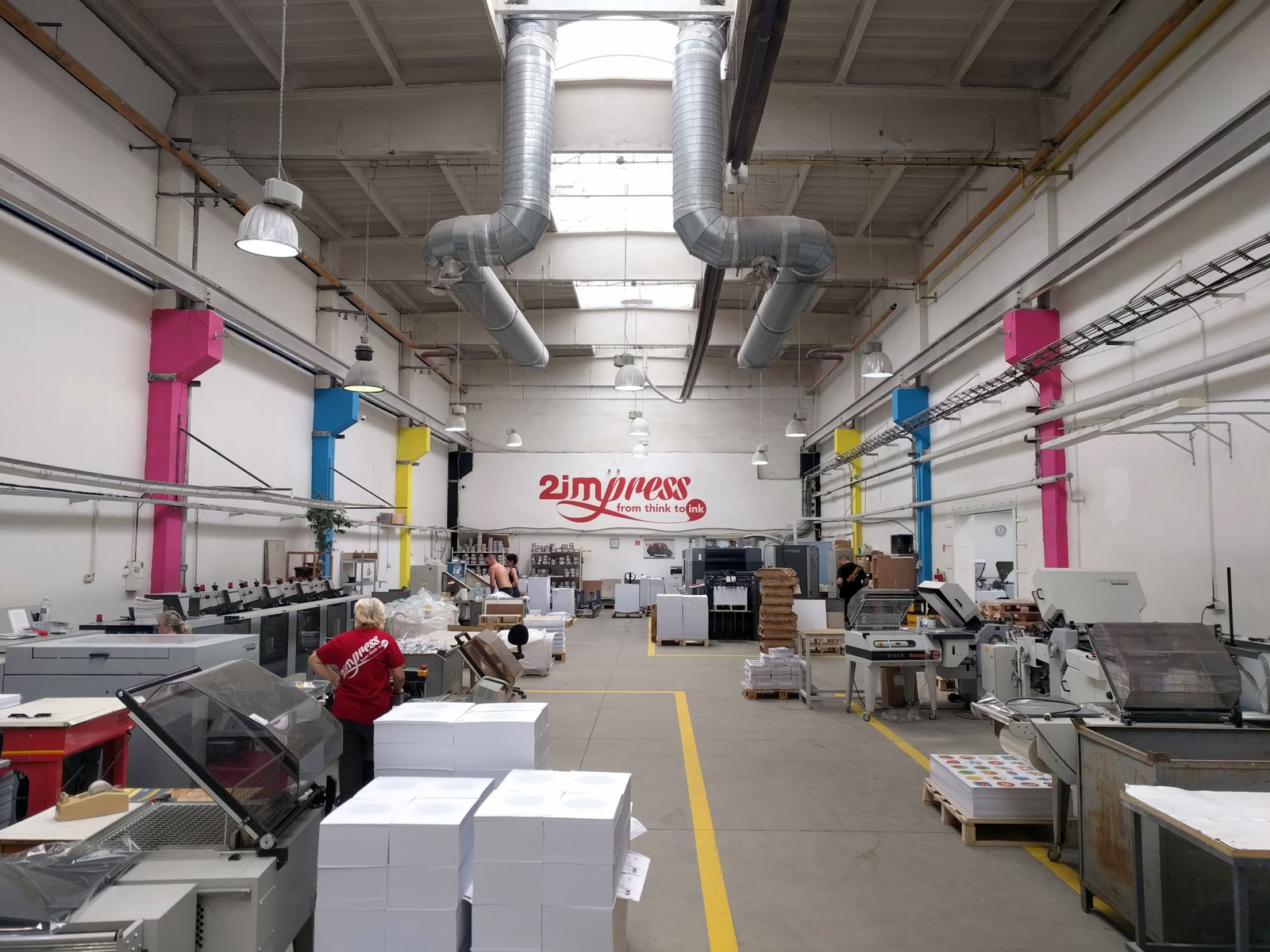
Once the box size calculator result is approved as a sample, the carton moves through one building. Pre-press imposes the dieline on a 28×40 inch sheet to minimise waste; a good imposition can cut board cost by 5–8% and is one reason a small change in box size sometimes lowers the price. The Heidelberg press prints four or six colours with inline coating, and the sheet goes to wet lamination.
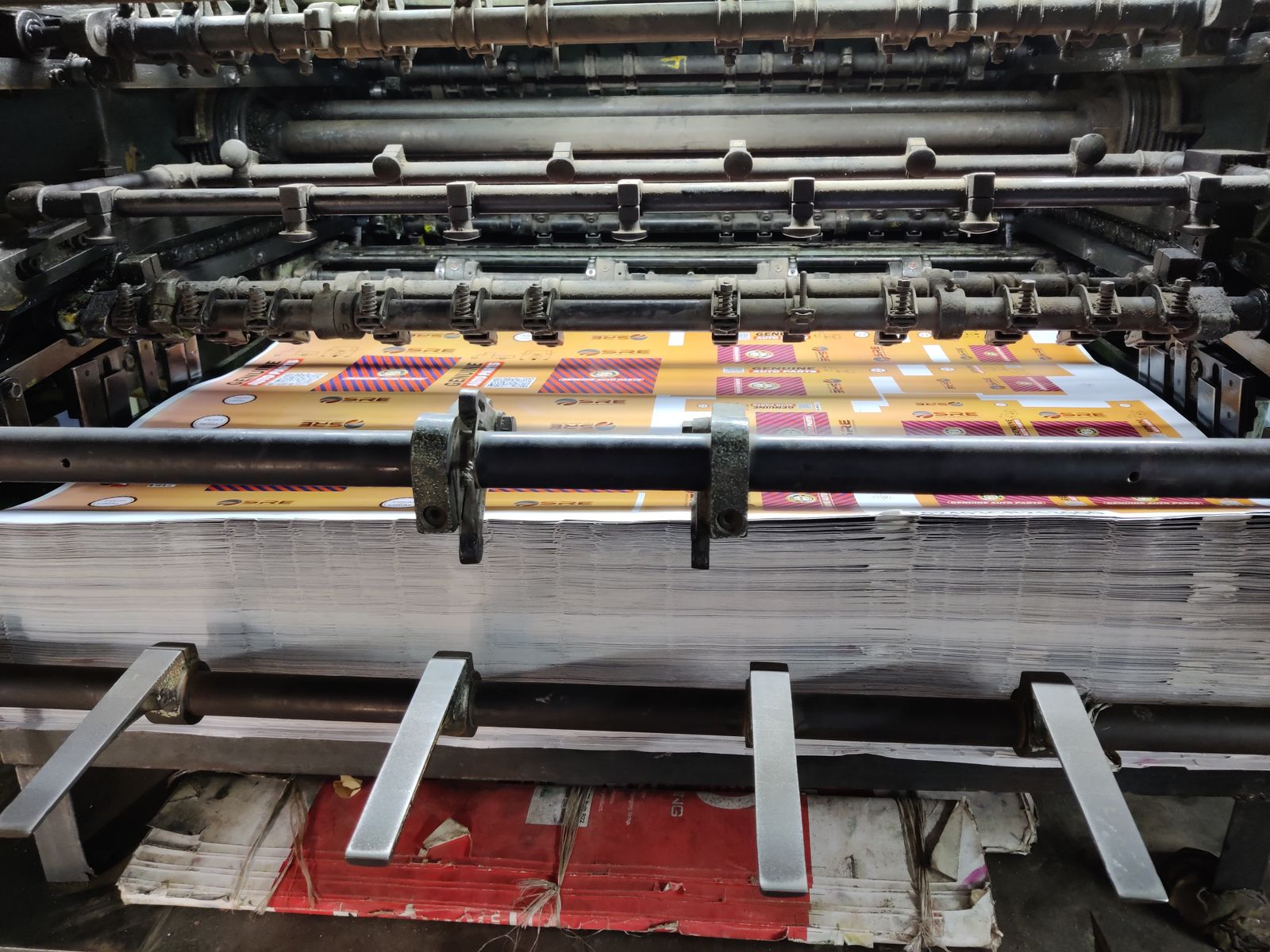
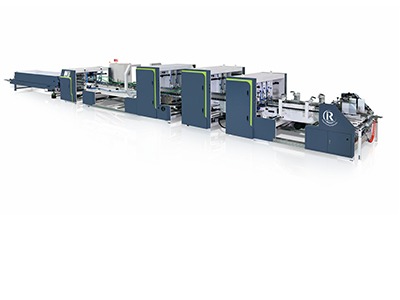
The flute laminator produces the E, B or C flute board the box size calculator selected, in 3-ply or 5-ply. Die-cutting follows, then folding and gluing on the Robus folder-gluer or stitching for heavy export cartons. A sample from every lot goes to the lab for bursting, edge-crush and Cobb tests.
Because every step is on one floor, the box size calculator’s 7–10 working-day lead time holds in peak season, when sub-contracted chains stretch to three weeks. Visits are welcome any working day at IMT Kharkhoda; bring your product and we will run the box size calculator with you and sample on the spot.
Box size calculator: worked examples for three products
Non-stick pan, 280 mm diameter, 70 mm high with lid, 1.4 kg. The box size calculator recommends a 290 x 290 x 80 mm internal tuck-in carton in 3-ply E-flute with a printed duplex liner, four-colour offset and UV coating. A corrugated insert holds the lid. Price band for 1,000 pieces is in the retail-carton range; 5,000 pieces drops the per-box figure by roughly a fifth.
Mixer-grinder, 220 x 180 x 320 mm, 4.5 kg with jars. The box size calculator proposes a 5-ply EB shipper, 235 x 195 x 335 mm internal, printed in two colours on the outer liner, with die-cut inserts separating jars and base. A master carton of four follows at 490 x 410 x 350 mm, which tiles a 1200 x 1000 pallet without overhang.
Subscription mailer, 300 x 200 x 80 mm contents, 0.9 kg. The box size calculator returns a 310 x 210 x 90 mm E-flute mailer, printed outside and inside, no insert. Minimum 1,000 pieces, printed sample in four working days. In each case the written quote lists the GSM of every layer so you can compare it with any other supplier on equal terms.
Box size calculator: testing the carton it recommends
Every carton the box size calculator recommends is tested before the lot ships. Bursting strength, in kg/cm², is the figure most Indian buyers quote and tells you how much pressure the board takes before rupture. Edge crush test predicts stacking strength and is the better number for warehouse pallets. Cobb value measures water absorption and matters for monsoon and cold-chain transit. Box compression and drop tests with the real product are added when a buyer needs them.
The report is attached to the invoice and kept for three years under ISO 9001:2015. Two cartons that look identical can differ by 30% in bursting strength if one uses a lighter medium, which is why the box size calculator’s grade recommendation should always be confirmed by a test, not by appearance.
Box size calculator: delivery across Delhi NCR and India
Cartons sized with the box size calculator are delivered by our own vehicles on fixed days to Bawana, Narela, Kundli, Badli, Wazirpur, Okhla, Gurugram, Manesar, Faridabad, Noida and Greater Noida. Elsewhere in India they ship flat on pallets by part-load transporter in two to four days, with a test carton sent ahead so you see how the box arrives before the lot does. New accounts pay 50% advance and 50% before dispatch; established accounts move to 30-day credit after three clean lots.
Repeat orders skip sampling and run from stored plates and the signed colour sample, so a second lot ships in 7 working days. Quotes are valid 30 days and revised only when paper prices move more than 5%. To begin, send your box size calculator result and a product photo to WhatsApp 98107 42123.
Box size calculator: sustainability options
Corrugated board is among the most recycled materials in India, and most liners the box size calculator assumes blend recycled fibre with virgin kraft. A mill declaration of recycled content is available for sustainability reports. Water-based adhesives and wet lamination mean no solvent emissions, and die-cutting offcuts are baled and returned to the mill.
If your brand has a plastic-reduction target, ask for the box size calculator result with a die-cut corrugated insert instead of EPE foam; the whole pack becomes a single recyclable material at a small increase in board cost, and we will show both options side by side at the sampling stage.
Box size calculator: when to ask for a custom dieline instead
The box size calculator covers the standard styles: tuck-in, crash-lock, RSC, mailer and master carton. Some products need more: a window to show the product, a hanging tab for peg display, a divider for a set, a drawer-style opening, or a shaped front. In those cases the calculator still gives the right internal size and board grade, but the dieline is drawn by our pre-press team from your product sample.
Custom dielines add two to three working days to the first sample and nothing to repeats. Send the box size calculator result plus a photo of what you want the box to do, and we will tell you whether a standard style with an insert will achieve it more cheaply. Most brands find that a standard style with a well-designed insert looks as good on the shelf as a custom construction and costs 10–15% less per box.