
Inside the Packsmith factory: print, paste, die-cut and ship under one roof
Packaging factory infrastructure you can audit: a 20,000 sq ft integrated unit at IMT Kharkhoda, Sonipat — Heidelberg offset presses, UV & lamination lines, flute lamination and converting, running two shifts for cookware, appliance and export packaging across Delhi NCR.
 01
Pre-press & design
Where every box starts — artwork, dieline and plates.
- Computer-to-Plate (CTP) plate-making
- Mac & PC design workstations — dieline, mock-up, 3D proof
- Digital colour proofing & Pantone matching
- Structural design: RSC, die-cut, auto-lock, inserts
What it means for you: You send a product photo; we send back a print-ready dieline and a physical sample before bulk.
 02
Offset printing
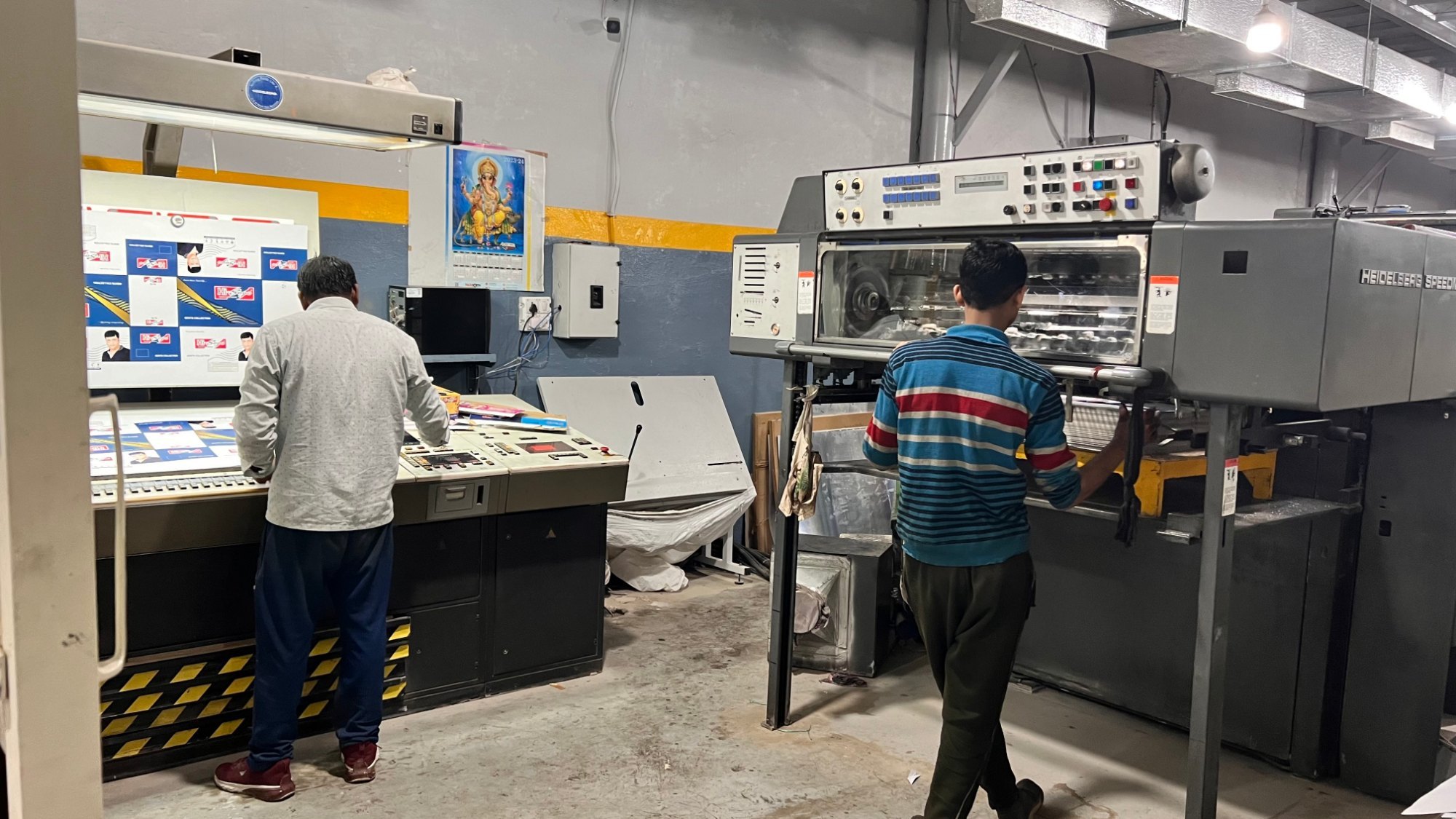
Heidelberg sheet-fed presses, 4-colour and 6-colour with inline coater.
- Heidelberg 4-colour offset press
- Heidelberg 6-colour offset press + inline coater
- Sheet size up to 28 × 40 in (71 × 102 cm)
- Metallised (met-pet) film & duplex/SBS board printing
What it means for you: Photo-quality print on cookware and appliance boxes, consistent across repeat orders.
 03
Coating & lamination
Finish that survives shelves, shipping and fingerprints.
- UV coating — full gloss and spot UV
- Wet (film) lamination — gloss / matte, high-volume
- Spot UV + lamination combinations for premium shelf look
- Metallised film lamination for premium UV-printed boxes
What it means for you: Scratch-proof, moisture-resistant surfaces that keep your brand looking new in retail.
 04
Corrugation & flute lamination
Printed top sheet meets corrugated board — the strength layer.
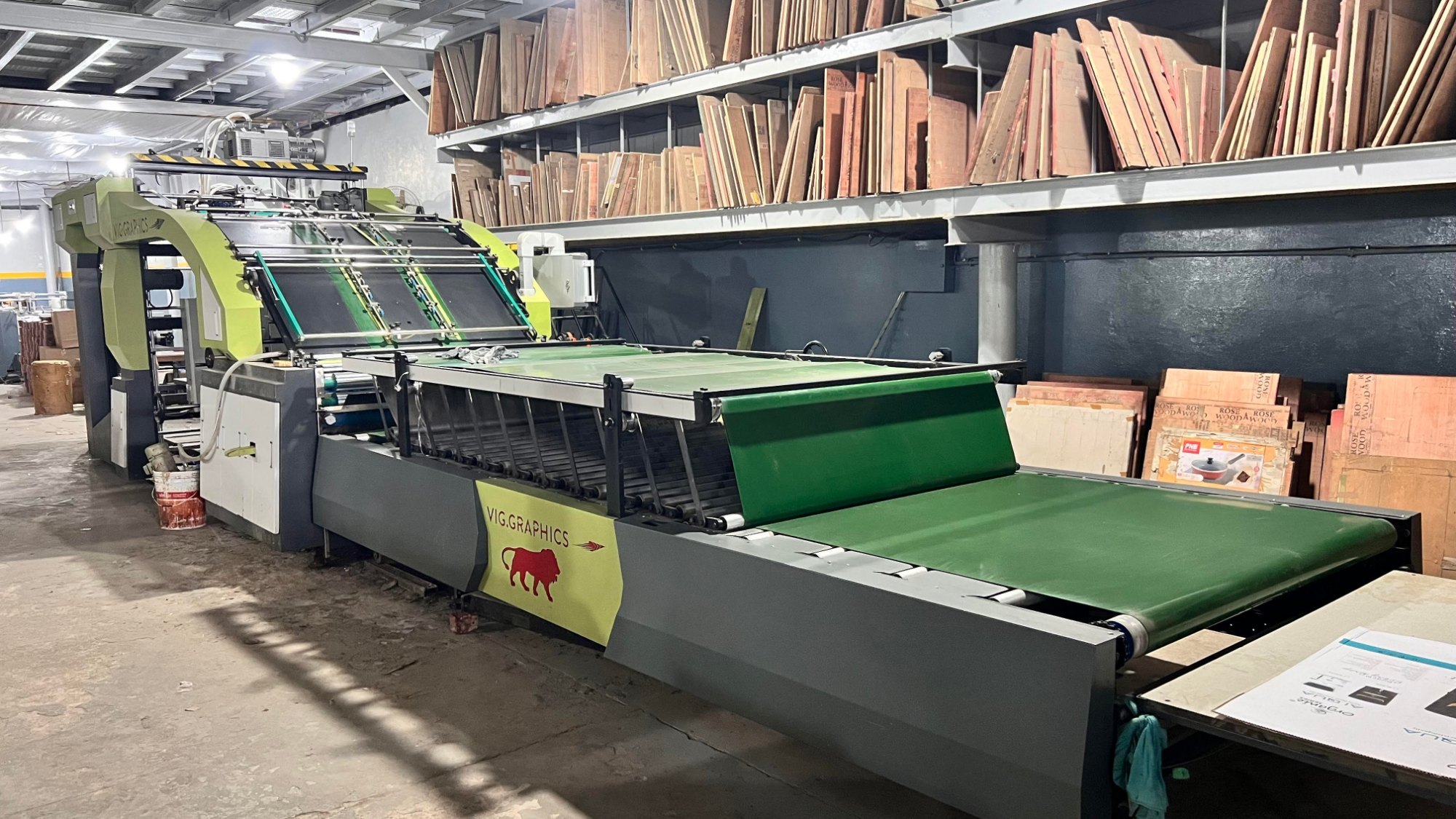
- Flute laminator / sheet-pasting line
- E, B and C flute
- 3-ply and 5-ply board
- Kraft, duplex and virgin liners as per load
What it means for you: Right flute for the right product: E-flute for print finish, B/C for heavy cookware and appliances.
 05
Die-cutting, folding & pasting
Shape, crease, fold, glue — ready to pack.
- Platen die-cutting with precision creasing
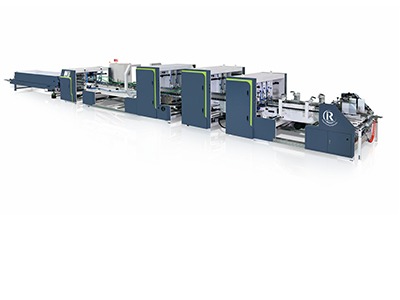
- Folder-gluer for straight-line and crash-lock boxes
- Stitching and pasting for shipping cartons
- Window patching, inserts and partitions
What it means for you: Boxes arrive flat, open square, and lock without tape on your packing line.
 06
Quality check & dispatch
Checked, bundled, strapped and on the truck.
- Bursting strength (BS) and GSM checks per lot
- Print-to-sample colour match sign-off
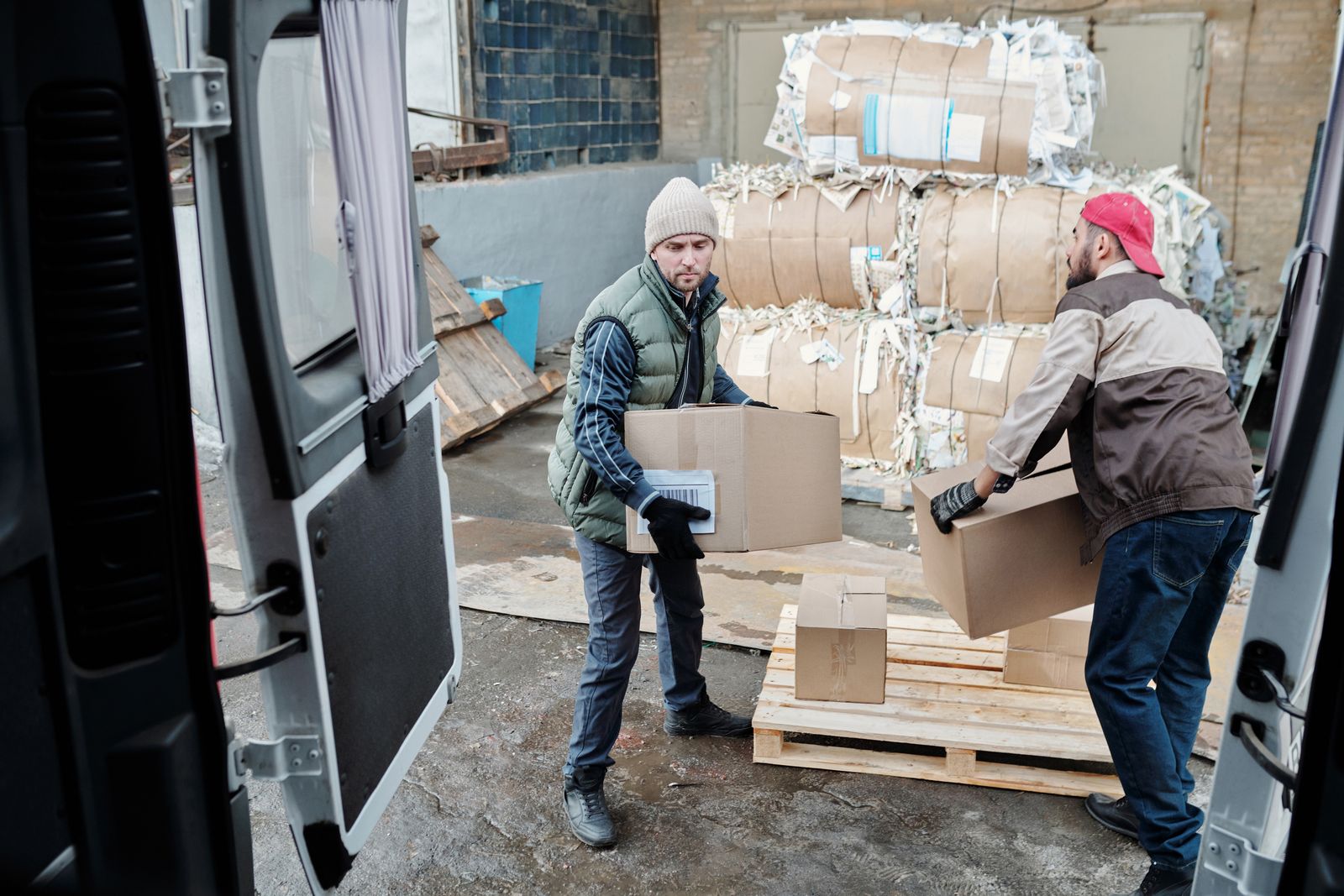
- Bundling, strapping, pallet or loose loading
- Own and partner fleet — Delhi NCR same-week delivery
What it means for you: From Sonipat to your factory gate in Bawana, Kundli, Manesar, Noida or Faridabad.
Certified, registered, audited
Every lot is checked for bursting strength, GSM and print match against the approved sample. We are a registered Indian manufacturer with full statutory compliance — ask us for test reports with your first order.
Packaging factory infrastructure: what to look for when you audit a box supplier
Packaging factory infrastructure is the difference between a supplier who makes your box and one who assembles it from other people’s work. When a buyer visits Kharkhoda, this is the walk we take and the questions we expect — use the same list anywhere else.
1. Pre-press: where consistency starts
CTP plate-making, calibrated monitors and a stored colour standard per SKU. Without this, every repeat order is a new colour negotiation. Ask to see how the previous lot’s approved sample is kept and matched; that is the first thing to judge in any packaging factory infrastructure.
2. Printing presses in a packaging factory infrastructure: sheet size and colour count
Our Heidelberg 4-colour and 6-colour presses with inline coater run 28×40 in sheets. Sheet size decides how many cartons impose per sheet (and so the price); colour count decides whether Pantone spots and photographic CMYK can run in one pass. A packaging factory infrastructure built on single-colour flexo only cannot produce retail-grade cookware or appliance boxes.
| Section | Equipment at Packsmith | What it enables |
|---|---|---|
| Pre-press | CTP, Mac/PC workstations, proofing | Stored colour standards, fast repeats |
| Printing | Heidelberg 4-col and 6-col + coater, 28×40 in | Photo-quality retail print, met-pet UV |
| Coating / lamination | UV coater, wet lamination | Gloss, matte, spot UV, scratch resistance |
| Corrugation | Flute laminator, E/B/C flute, 3- and 5-ply | Printed sheet on board, right flute per product |
| Converting | Platen die-cutter, folder-gluer, stitching | Crash-lock, inserts, shippers |
| QC & dispatch | BS tester, GSM balance, own vehicles | Lot reports, timed delivery |
3. Coating and lamination in-house
UV coating and wet lamination are where printed sheets get their durability. If this step is sub-contracted, sheets travel across the city twice and the schedule depends on someone else’s queue. Packaging factory infrastructure that includes lamination keeps the job on one floor and the lead time at 7–10 days.
4. Flute lamination and board — the core of corrugated packaging factory infrastructure
The flute laminator pastes the printed top sheet to corrugated board. Ask which flutes (E, B, C) and plies (3, 5) the line handles and what liner grades are stocked; that tells you whether the supplier can move from a light retail box to a heavy appliance carton without changing vendor.
5. Converting: die-cutting and folder-gluing
Platen die-cutting gives deep, clean creases; a folder-gluer closes side seams and crash-lock bases at speed. Both matter for boxes that must open square on a packing line. We also stitch and paste shippers for export. In a packaging factory infrastructure audit, watch a box being folded from the line — if it needs force, the crease is wrong.
6. Testing and dispatch
No packaging factory infrastructure is complete without a lab and a fleet.
Bursting strength tester, GSM balance, moisture meter; one report per lot that travels with the challan. Own vehicles for Delhi NCR with timed slots. See our areas page for routes and the gallery for jobs that came off this line. For context on what a complete corrugated plant looks like, the FEFCO technical library is a useful reference.
Audit checklist
- Printing, lamination, corrugation and converting on one site?
- Sheet size and colour count of the presses
- Flutes, plies and liner grades in stock
- Test equipment and a report per lot
- Stored dies, plates and colour standards per customer
- Own delivery fleet or third-party transport
Book a walk-through on WhatsApp 98107 42123; two hours in Kharkhoda answers every packaging factory infrastructure question on this list.
More on packaging factory infrastructure (expand any section)
Detail for quality and purchase teams.
Capacity planning: how 50,000 boxes a day is scheduled
Our packaging factory infrastructure runs two shifts, 70–80 workers, and a weekly plan built around customer delivery windows. Presses run retail top sheets first because lamination and flute pasting follow; converting runs a day behind printing; dispatch is planned by route. The packaging factory infrastructure is sized so a festive-season spike of 30–40% can be absorbed by adding hours rather than vendors. Customers can block capacity for October–November in August.
Why metallised (met-pet) UV printing needs specific infrastructure
Metallised film is a packaging factory infrastructure question: the film does not absorb ink, so conventional offset inks will not dry on it. UV-cured inks and an inline UV unit are required, plus lamination equipment that handles film-laminated sheets without bubbles. This is why many box suppliers cannot offer met-pet print and why cookware brands look for packaging factory infrastructure that specifically includes a UV line — ours does.
Quality lab: tests we run and what the numbers mean
Bursting strength (kg/cm²) measures the pressure a board sample withstands — the single best comparison number between quotes. GSM confirms the liner weight was delivered as quoted. Moisture content predicts warping in storage and sea freight. Print is checked visually against the stored sample under daylight-balanced light. Any packaging factory infrastructure without these three instruments cannot honestly promise lot-to-lot consistency.
Frequently asked questions about our infrastructure
Can we visit? Yes, any working day, about two hours.
Do you sub-contract anything? No process step; only specialised finishes like hot-foil in very large volumes are occasionally outsourced to a partner we audit.
Do you make 7-ply? Yes, by pasting; export shippers are routine.
What is your sheet size? 28×40 in on both presses.
Is the packaging factory infrastructure ISO certified? Yes, ISO 9001:2015.
How packaging factory infrastructure changes your lead time and price
Lead time is mostly waiting time. In a sub-contracted chain the printed sheets wait for a truck to the laminator, wait in the laminator’s queue, travel to the corrugator, wait again, and then reach the die-cutter. Each wait is one to three days, which is how a “7-day” job becomes three weeks. When the packaging factory infrastructure holds every step on one floor, a sheet printed on Monday can be laminated Tuesday, flute-pasted Wednesday, die-cut Thursday and on a vehicle Friday — the 7–10 working-day promise we make is the physical result of that layout.
Price moves the same way. Every hand-off adds a margin of 8–15% and a transport cost; a trader selling a box made in three places is typically 20–30% above a factory price for the same specification. The savings are larger on printed retail boxes than on plain shippers, because printing and lamination are the steps most often outsourced. Ask any supplier to walk you through where each process happens; if the answer includes another company’s name, add that margin to the comparison.
The last effect is on consistency. A single packaging factory infrastructure keeps one colour standard, one board stock and one test lab for your SKU; three vendors mean three versions of your box. For brands selling in modern trade, where a shade difference is noticed on the shelf, this is usually the deciding factor.
Planning a factory visit: what to see in two hours
Start in pre-press to see the stored colour samples and plates for your SKUs. Move to the printing hall and watch a sheet come off the Heidelberg press — check registration and the inline coater. In the lamination section, ask to see a metallised sheet and a laminated sheet side by side. At the flute laminator, note the flute types and liner rolls in stock. In converting, fold a box from the die-cutter and check the crash-lock base. Finish in the test lab with a bursting-strength test on a sample from a live lot, and in dispatch to see how bundles are strapped and vehicles loaded.
That route covers the whole packaging factory infrastructure and answers the questions on the audit checklist above. Bring your current box and a product sample; we will size, test and quote on the spot. Visits are welcome any working day; IMT Kharkhoda is 12 km from Bawana, 9 km from Kundli and a direct expressway run from Manesar, Faridabad and Noida. Send a WhatsApp to 98107 42123 with a preferred date, and we will have the relevant samples and reports ready when you arrive.
Choosing board grade and flute from the factory floor
Board choice is where most packaging money is saved or wasted, and it is easier to get right when the buyer can see the liner stock and flute options in one packaging factory infrastructure. The flute profile sets the cushioning and the stacking strength. E-flute is about 1.5 mm thick and gives a smooth, printable surface for retail boxes such as cookware and small appliances. B-flute is around 3 mm and suits products that need some crush resistance with a decent print face. C-flute at roughly 4 mm is the standard shipping-carton flute for export and e-commerce.
Combining two flutes into a 5-ply board, for example BC or EB, gives a carton that carries 25–40 kg of product through a long transit without bulging.
Paper grade matters as much as flute. A 3-ply carton with 120 GSM kraft liners and a 100 GSM medium behaves very differently from the same construction with 180 GSM virgin kraft liners. Bursting strength roughly tracks liner weight, and the only honest way to compare two quotes is to ask for the GSM of each layer plus the bursting factor of the finished board. In our packaging factory infrastructure the lab tests every lot of incoming paper and every finished board, so the figures on the quote are the figures you receive.
A practical rule for first-time buyers: match the flute to the shelf, not the warehouse. If the box will be seen by a shopper, start with E-flute and a printed duplex top liner; if it only has to survive a truck and a warehouse, start with C-flute kraft and spend the saving on a stronger liner. The factory can then sample both in a day because the laminator, corrugator and die-cutter are within a hundred feet of each other.
Printing and finishing options explained in plain language
Offset printing on the Heidelberg presses is the standard for retail boxes because it reproduces photographs, fine type and brand colours accurately on a 28×40 inch sheet. Four-colour process (CMYK) covers most artwork; the six-colour press adds two spot colours, such as a brand Pantone or a metallic, and an inline coater that lays down aqueous or UV varnish in the same pass. For plain shippers in one or two colours, flexographic printing directly on the kraft liner is cheaper and perfectly adequate for a logo, a handling mark and a barcode.
Finishing changes how the box feels and how it survives. UV coating gives a hard, glossy surface that resists scuffing on a retail shelf. Wet lamination bonds a printed duplex sheet to the corrugated board with water-based adhesive and is the method we use throughout the plant; it avoids the heat of thermal lamination and keeps the board flat. Spot UV, embossing and metallised film are available when a premium look is needed, and all of them are done inside the same packaging factory infrastructure so no sheet leaves the building between printing and die-cutting.
The die-cutting and folder-gluer stage turns a flat printed sheet into a usable box. Our Robus folder-gluer handles straight-line, crash-lock and four-corner constructions; stitching is used for heavy export cartons where a wire-stitched joint outperforms glue. Each of these choices has a cost and a lead-time implication, and the fastest way to settle them is a 30-minute call with a sample in hand. The team will tell you which finish the Heidelberg line can produce inline and which needs a separate pass, so the quote and the delivery date are both realistic from the start.
Machine list in detail
Pre-press: CTP plate setter, calibrated Mac and PC workstations, digital proofing. Printing: Heidelberg 4-colour sheet-fed offset; Heidelberg 6-colour sheet-fed offset with inline coater; both 28×40 in. Coating: UV coating unit (full and spot). Lamination: wet lamination machine for film on printed sheets; metallised film capability. Corrugation: flute laminator for E, B and C flute, 3- and 5-ply; sheet pasting. Converting: platen die-cutters, automatic folder-gluer (Robus), stitching and manual pasting for shippers, window patching. QC: bursting strength tester, GSM balance, moisture meter. Dispatch: strapping and bundling, own vehicles. This packaging factory infrastructure is what every job on the gallery page was produced on.
See it for yourself — book a factory visit
IMT Kharkhoda is 45 minutes from Bawana and Kundli. Or send your dieline and we’ll courier a sample.